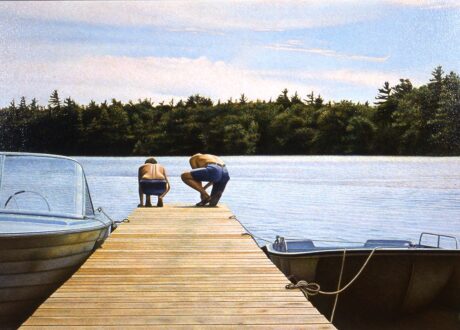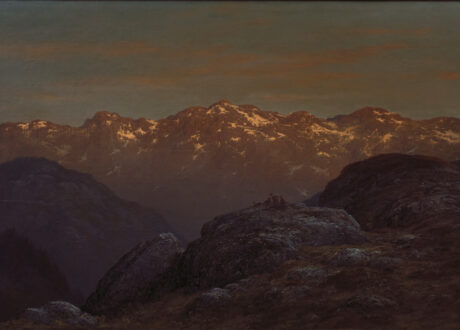
Forshaw Day: Looking Outward considers some of the influences that informed Day’s desire to shift focus away from the bustling developments in the urban environment around him, and instead on the vibrant landscapes that quickly became the subject of many of his paintings.
This exhibition presents a compact collection of Day’s influential style that helped shape 19th Century Atlantic Canadian landscape painting and depicted descriptive scenes of rural Nova Scotia in vivid detail.
Curated by: Michael McCormack.
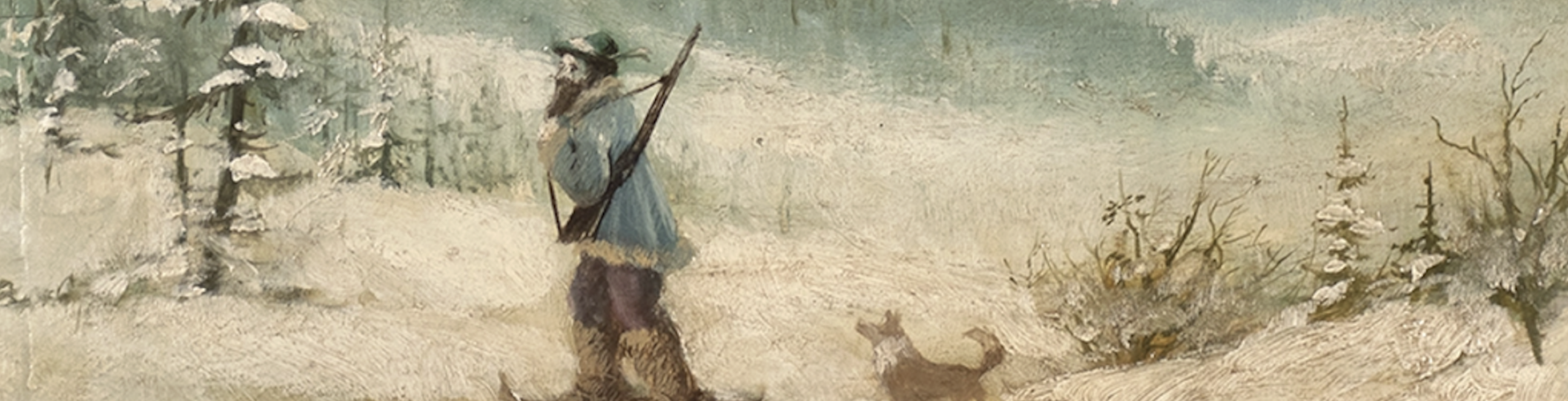
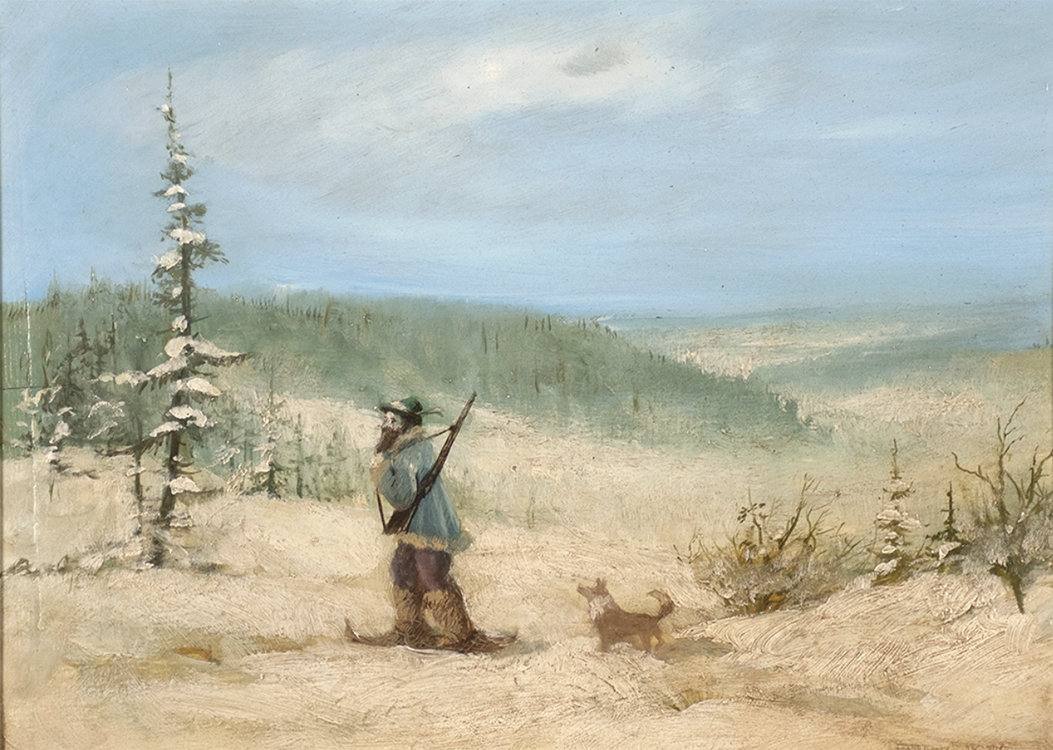
Image: Forshaw Day, The Hunter, 1880. Oil on panel. 19.5 x 27.0 cm. The John and Norma Oyler Collection, Gift of John Oyler, Halifax, Nova Scotia, 2025.
About the Artist:
Forshaw Day was born in London, England, in 1831 and trained in architecture and design at the Royal Dublin Society Schools of Drawing and the Normal Training School in London—known informally as the South Kensington School of Art and now the Royal College of Art. In 1862, Day immigrated to Halifax, Nova Scotia, where he worked as a draftsman at the Royal Naval Dockyard. Alongside his professional work, he taught art privately and at the Nova Scotia Technical College, sharing his expertise with aspiring artists.
Day quickly established himself as a prominent figure in Halifax’s cultural scene. In the fall of 1863, he held a solo exhibition featuring landscapes of Nova Scotia, marking the beginning of his reputation as the city’s leading artist. For the next two decades, Day exhibited regularly in Halifax and sent works to prestigious exhibitions in London and Paris. His popularity was such that local newspapers affectionately referred to him as “our painter,” a testament to his deep connection with the region.
Curator Dianne O’Neill, speaking at a 2007 Art Gallery of Nova Scotia exhibition, noted that Day “ignored the urban world and found his subjects in the rural countryside.” As transportation networks expanded, Day traveled extensively across Nova Scotia, from Yarmouth County in the southwest to Louisbourg in Cape Breton, sketching and painting on location. His works capture the province’s natural beauty with sensitivity and precision, offering a vivid record of 19th-century landscapes.