In the late-1960s and 1970s, artists across the globe began to abandon traditional approaches to artmaking in favour of ideas as the essence of their work. This departure from the prevailing formal and material concerns resulted in new ways of engaging with the world beyond the walls of the studio. It also led to a questioning of the very nature and social role of art and practice.
During this period artists started to look at photography in a different light. Rather than a medium restricted by the attitudes and aesthetics of the past, photography was being used to convey and document a variety of fresh concepts and strategies. The camera was seen as the perfect tool to explore the interplay of images and ideas, language and expression.
Many of the artists included in this exhibition shared an interest in sculpture and performance. They used image-text combinations and serial production, among other devices, to probe how the photograph can support narratives and generate meaning. Experiments with film and video expanded their investigations into yet another exciting and previously unexplored space.
This exhibition features works from the AGNS’s permanent collection made amid this seismic shift in thinking by artists with close ties to Halifax. Also highlighted is the confluence of people and ideas that were brought together at the Nova Scotia College of Art and Design which was widely viewed as the epicentre of art education—and arguably of the conceptual art world itself—in the late-1960s and 1970s.
Artists include David Askevold, Wallace Brannen, Susan Britton, Graham Dubé, Dennis Gill, John Greer, Richards Jarden, Ian Murray, William Souter, Alison Rossiter, Bill Vazan, Douglas Waterman, Konrad Wendt, & Tim Zuck.
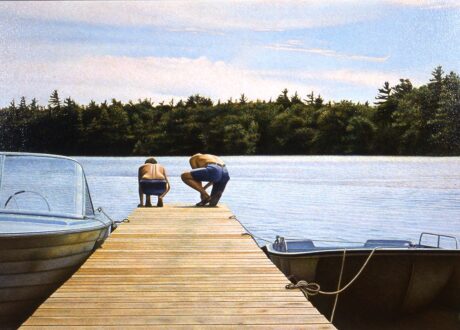
Image 1: Richards Jarden, c. 1970
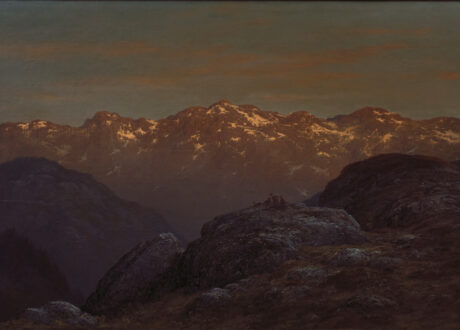
Image 2: Wallace Brannen, 1971


With Generous Support From
H. Wayne Garland