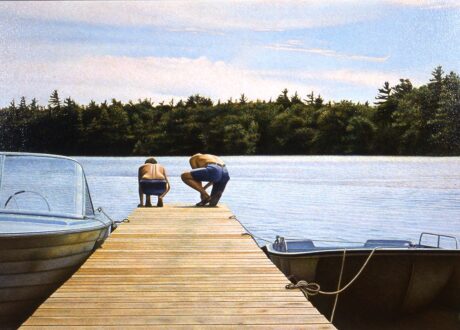
Colville, Forrestall, Pratt & Pratt: The Work Behind the Work offers a rare glimpse into the fastidious processes of artists Alex Colville, Tom Forrestall, Christopher Pratt, and Mary Pratt, where visitors are invited to move beyond the finished works and explore the thought processes, skill, and careful observation behind Atlantic Canada’s most celebrated paintings.
This exhibition invites audiences into the meticulous world of Atlantic Realism—a distinctly Atlantic Canadian discipline that emerged in the 1960s by students at Mount Allison University, and defined by its precision, intellectual rigour, and careful observation of everyday life.
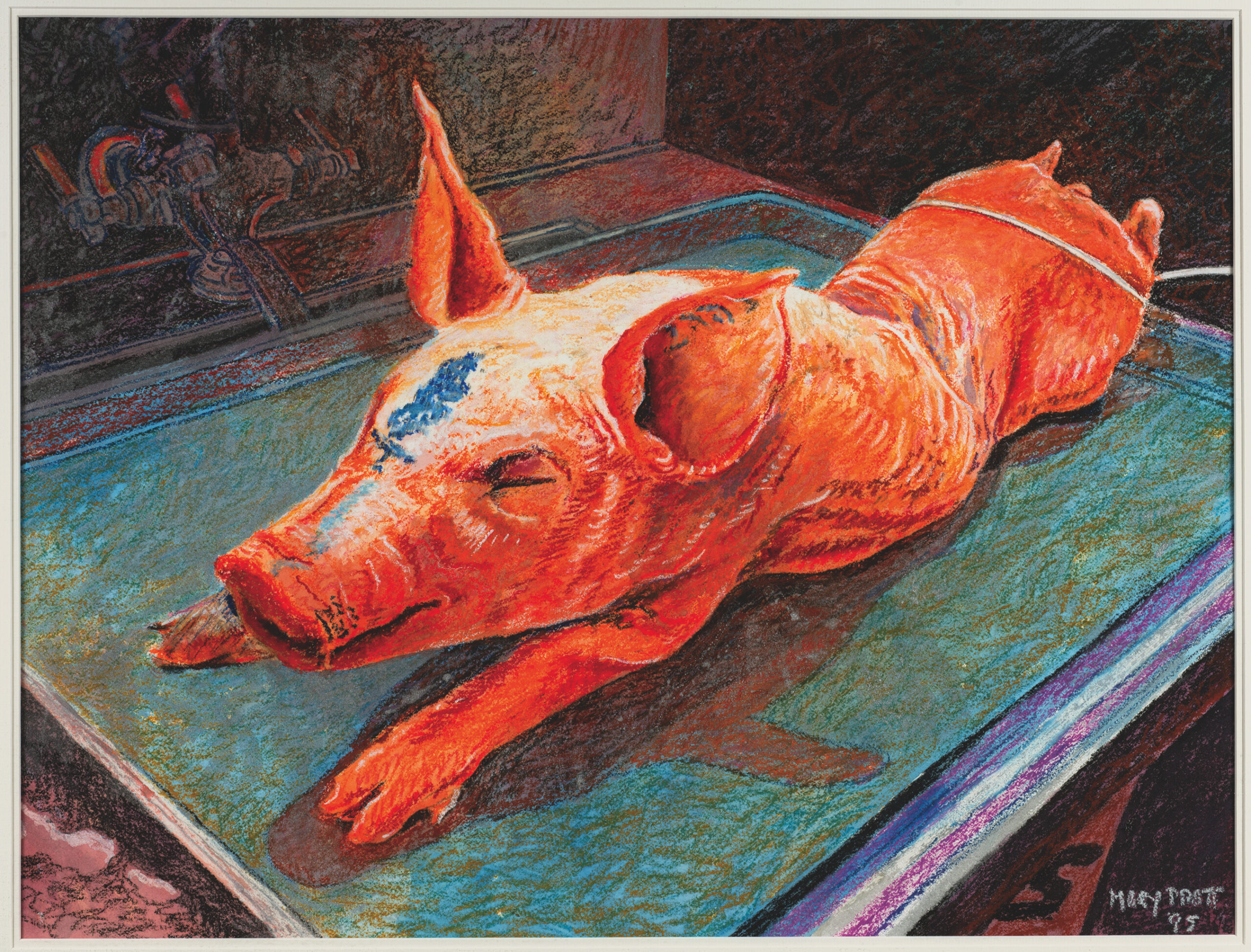
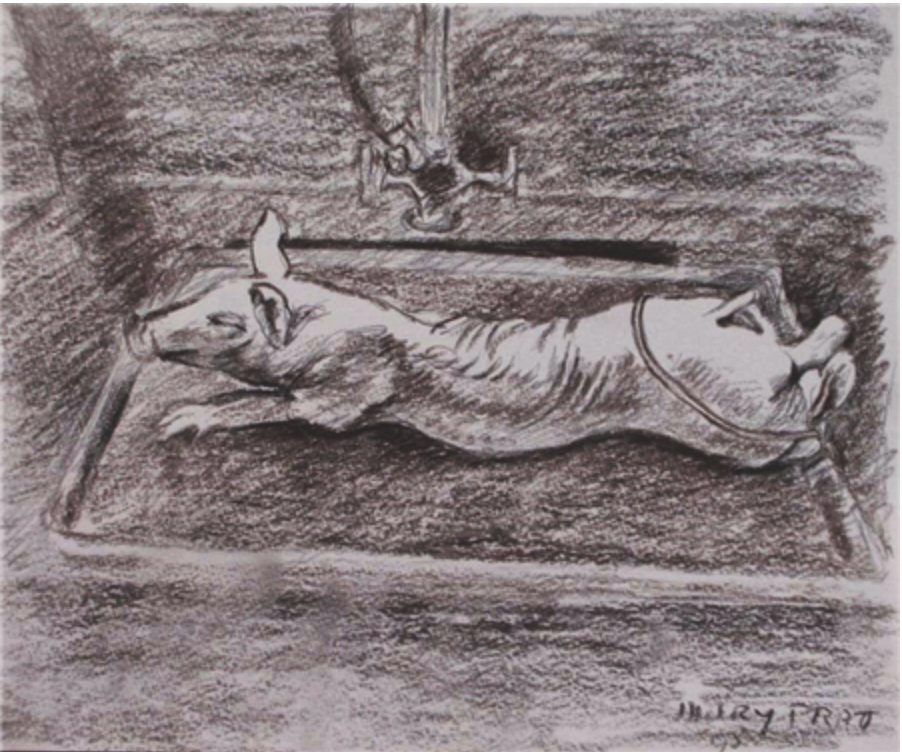
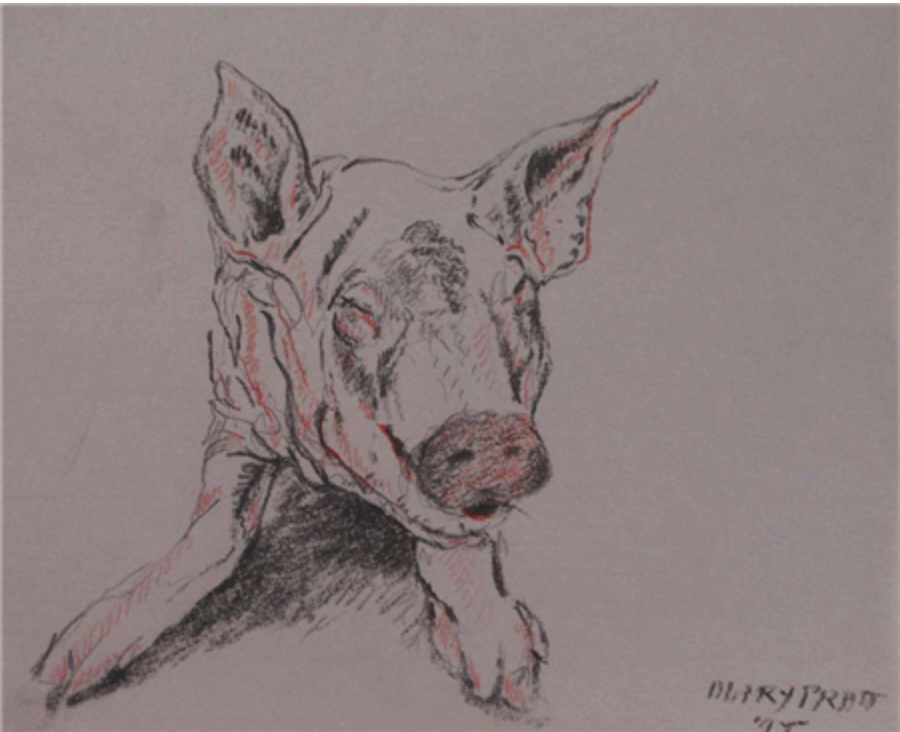
Through preparatory sketches, calculations, and material decisions, this exhibition highlights how each of these artists developed distinct practices within a shared tradition—one that ranges from Colville’s mathematically precise constructions and Forrestall’s sensory engagement with nature, to Christopher Pratt’s minimalist Newfoundland landscapes, and Mary Pratt’s luminous domestic still lifes.
Featured Image: Alex Colville, Ocean Limited, 1962 (detail). Oil and synthetic resin on Masonite. 68.5 x 119.3 cm. Purchased with funds provided by Christopher Ondaatje, Toronto, Ontario, the Art Sales and Rental Society, Halifax, Nova Scotia and a Private Donor, 1994.
Curated by: David Diviney and Sarah Moore Fillmore.
About the Artists
Alex Colville approached painting not as a direct transcription of reality, but as a disciplined construction of ideas ‘in response’ to it. His practice relied on rigorous geometric planning and mathematical calculation, generating an imposed sense of order and balance that exceeds what is naturally observable. Using a subtle, nearly invisible pointillist technique in egg tempera or acrylic on hardboard, he created smooth, unified surfaces that foreground the conceptual force of the image rather than the presence of the artist’s hand. Drawing from personal experiences and familiar surroundings, Colville distilled everyday scenes into symbol-like compositions that meditate on universal human conditions—love, isolation, tension, and the enigmatic quiet of ordinary life.
Tom Forrestall’s practice sat firmly within magic realism, where the act of looking became central to the viewer’s experience. Unlike Colville’s calculated, mathematically structured method, Forrestall often painted outdoors in watercolour, embracing spontaneity and the immediate sensory encounter with nature. His use of shaped canvases—circles, polygons, and other non-rectilinear forms—extended this sensibility, allowing the support itself to echo and amplify the subject. Through his meticulous handling of egg tempera, he revelled in fine detail, infusing ordinary objects and rural settings with a heightened, sometimes surreal energy that pushed visual realism toward a “truer, deeper” register.
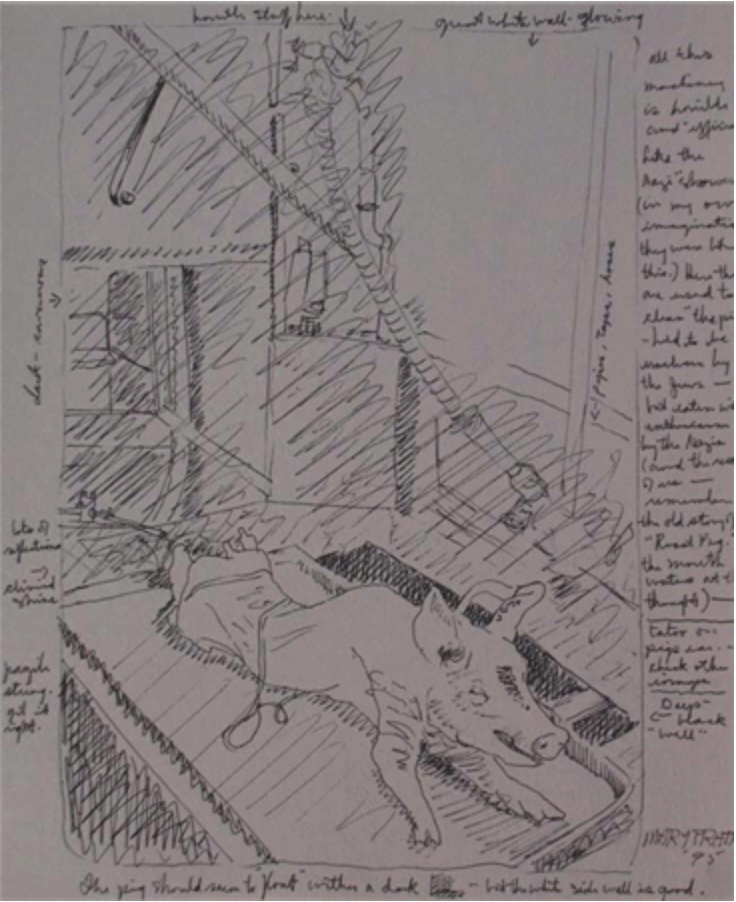
Mary Pratt’s practice centred on an unflinching yet celebratory attention to domestic life, which she elevated to the realm of high art through a meticulously executed photorealist method. Working from photographs that captured fleeting light and ephemeral moments, she reproduced not only the scenes themselves, but also the camera’s distortions and depth of field, sharpening the viewer’s awareness of perception. For Pratt, light was the true subject—glinting on fish scales, glowing through jars of jelly, or shimmering across a silver serving tray—transforming the everyday into the visually extraordinary. Beneath this luminosity, her still-lifes often registered the tensions and “latent anxiety” embedded in domestic roles and relationships, offering pointed social commentary on women’s experiences through scenes that are at once intimate, exacting, and psychologically charged.
Christopher Pratt shared Atlantic Realism’s commitment to rigour, but channeled it through stark minimalism and an acute sense of place rooted in Newfoundland’s austere landscapes. He consistently pared imagery down to essentials, aiming to paint less what he sees than what he thought after sustained looking. Like Colville, Pratt adopted an almost engineered approach to composition, using preparatory drawings to simplify form and produce a subdued, tightly controlled aesthetic. Through large, flat planes of colour and carefully calibrated spatial arrangements, his works evoke mood and memory—what has been described as the “subliminally dramatic”—yielding serene yet quietly haunting landscapes and interiors that carry pronounced psychological depth.
Major Donors

Presenting Sponsor

Exhibition and Publication Partners



With Generous Support From
AGNS Patron Supporters
John W Beveridge
Community Foundation of Nova Scotia through John MacLeod / Karen Smith supported donations




Additional Support From
Elizabeth Precious
Dr. and Mrs. W Stanish