


Mary Pratt: Beauty in the Everyday
Working from photographs and careful observation, Mary Pratt found extraordinary meaning in the objects and rituals of daily life.
Mary Pratt: Beauty in the Everyday
Mary Pratt is celebrated for her luminous, hyper-realistic paintings that transform everyday moments into remarkable visual experiences. Widely recognized for her brilliant, acute attention to detail, she transformed what is often overlooked in domestic, everyday scenes into complex artworks that demand careful contemplation and reveal the extraordinary within the ordinary.
Pratt developed an early interest in art and pursued formal training at Mount Allison University where she studied under Alex Colville and others. After her degree, she established her painting career while raising a family in Newfoundland and honed her distinctive photorealistic style using colour slides as references for her meticulous work.
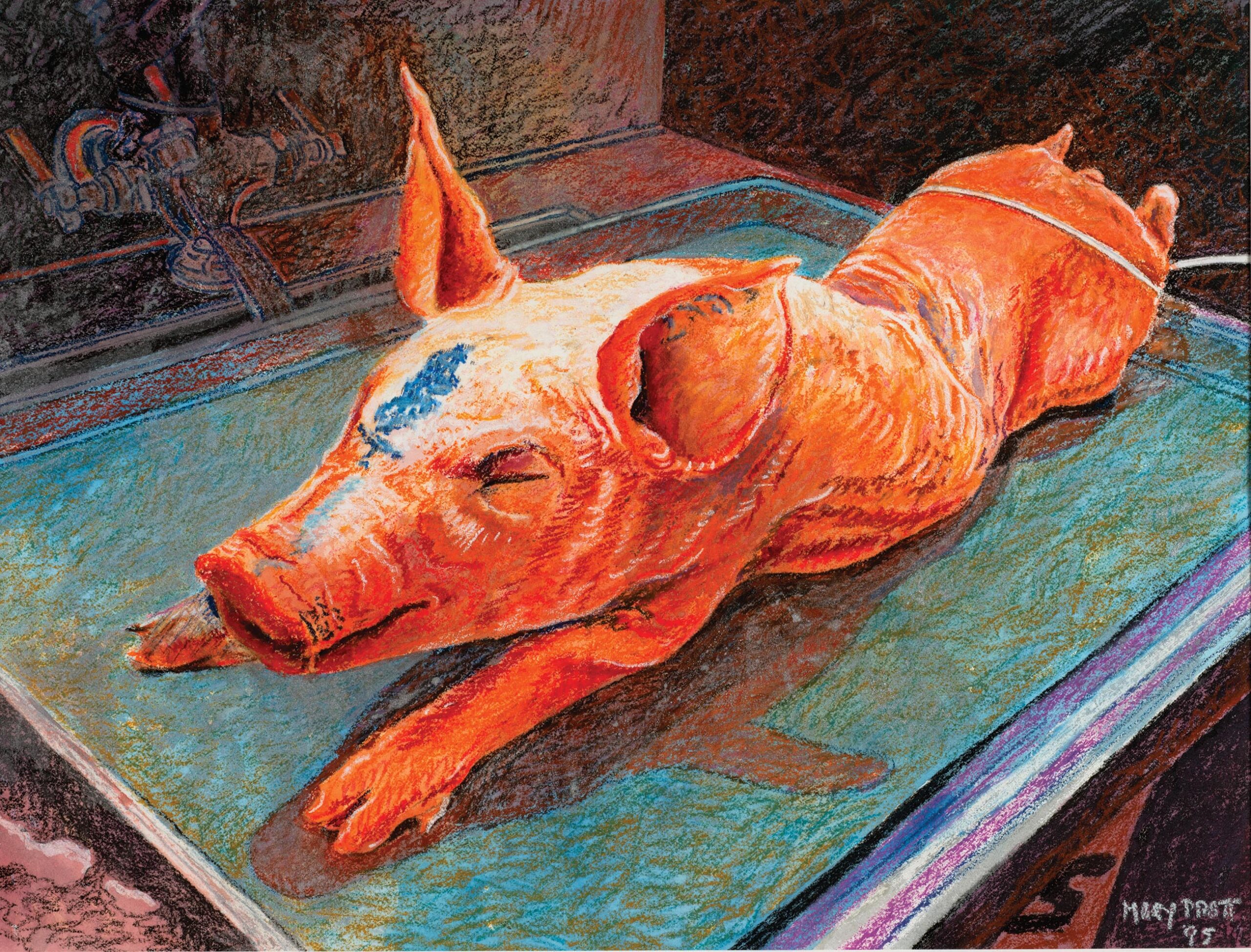
Through masterful depictions of light that elevated domestic subjects, Pratt revealed the beauty and complexity of daily life. 1995’s The Pig, featured in the exhibition Colville, Forrestall, Pratt & Pratt: The Work Behind the Work, is not a romanticized image of a roast suckling pig with an apple in its mouth, but rather a raw, uncooked pig in the kitchen sink. It evokes the raw ingredients of domestic life, hinting at the potential for a beautiful, elegant, and delicious meal which were expectations often placed on women of Pratt’s generation.
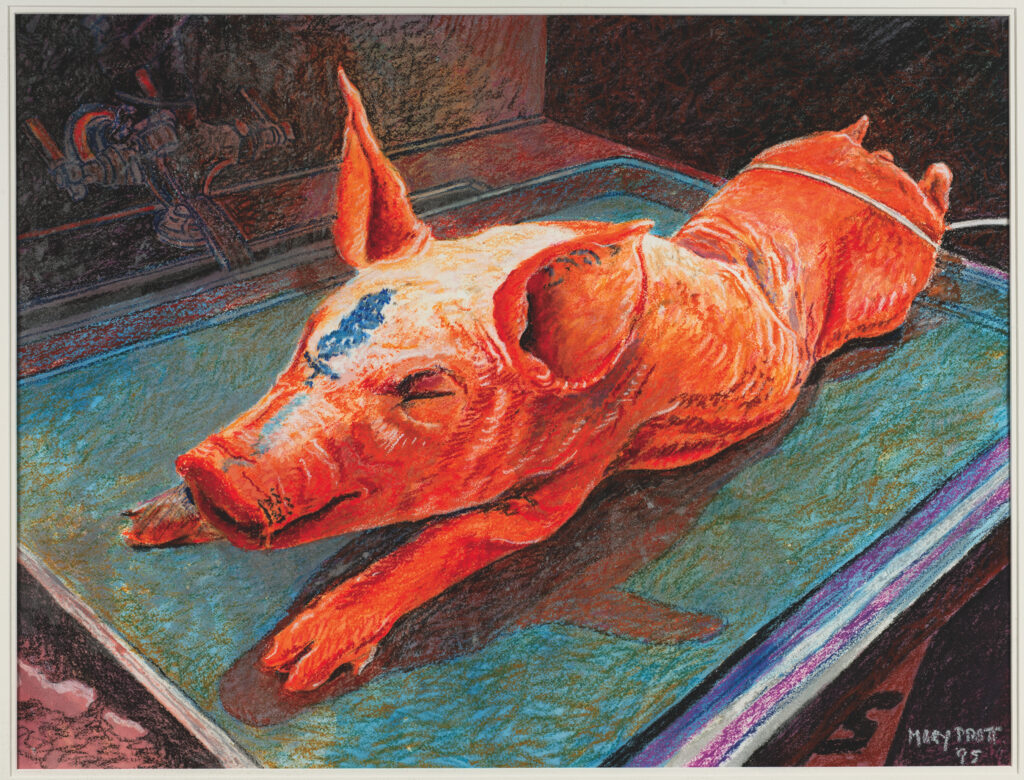
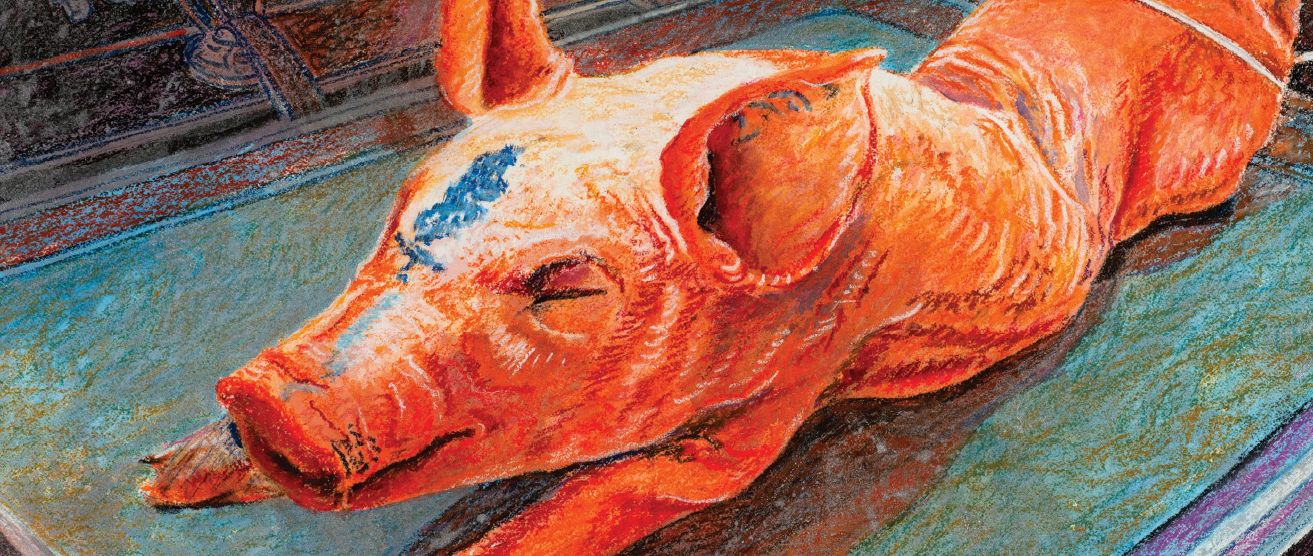
The Pig (1995) is a striking example of Pratt’s mixed-media paper works. While the piece is highly realistic in its rendering of light, colour, and form, it differs from the precise brushstrokes found in her paintings. A sense of playfulness emerges through expressive lines and mark-making. Its dynamic composition positions the dead pig on a diagonal atop a cutting board over the sink.
Image: Mary Pratt, The Pig, 1995. Pastel and mixed media on Arches paper. 57.5 x 76.0 cm. Gift of the Artist, St. John’s, Newfoundland, 2005.
Warm and cool tones are positioned side by side—pink and orange against cool blue. Working together, its colour, composition, and mark-making craft an image that is both alluring and unsettling. The result is an image that is visually captivating yet disturbing in its presentation of an animal’s carcass.
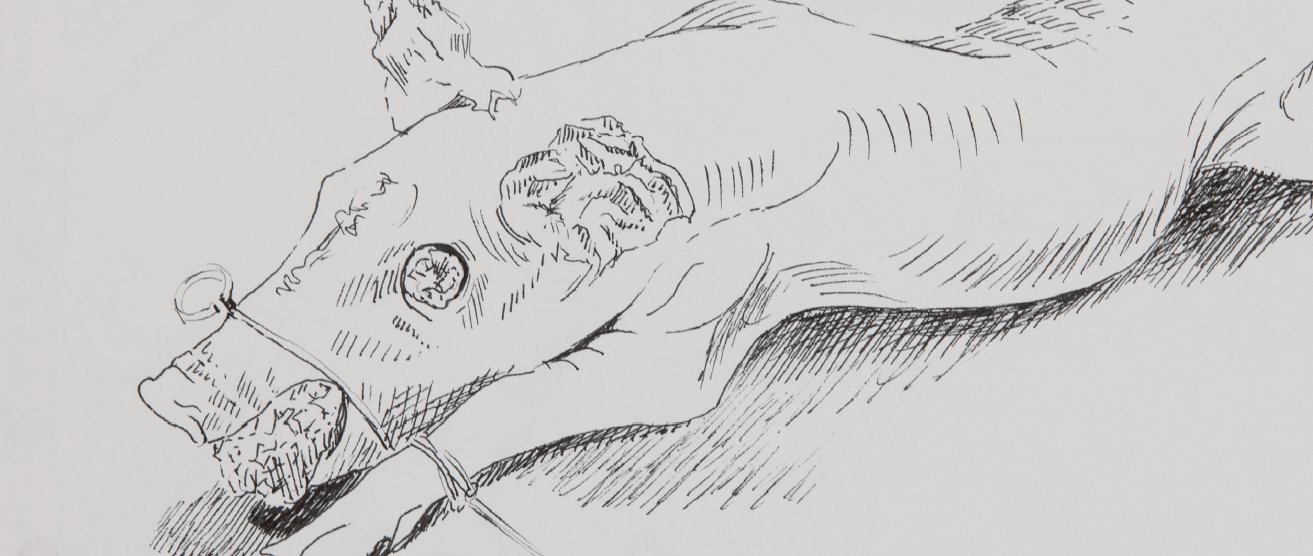
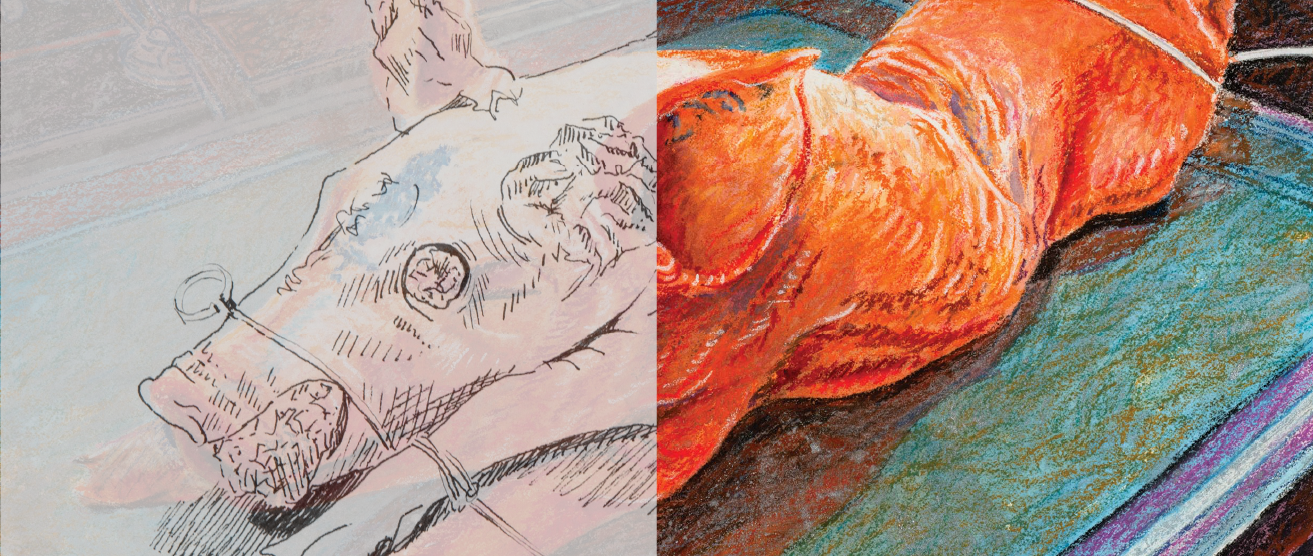
Each stage of Pratt’s creative process is revealed in the accompanying sketchbook of preparatory drawings which originated from a short film for the television program “Mary Pratt’s Christmas”. These sketches, rendered in black on grey paper, document both the origin of the finished artwork and its adaptation for the film.
Image: Mary Pratt, Sketchbook : The Pig : Page 2, 1995. Wax pastel on paper. 23.3 x 27.1 cm. Gift of the Artist, St. John’s, Newfoundland, 2005
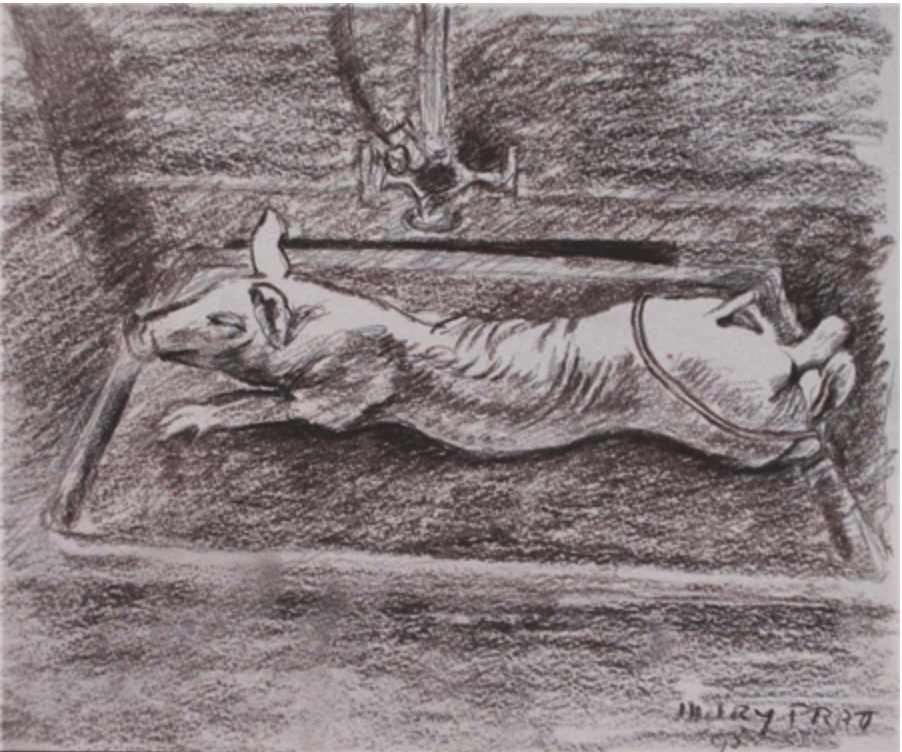
Pratt’s sketches explore the different compositions and settings she considered before arriving at the final version, from early compositional considerations and mark-making to the final work in pastel and mixed media. Refusing to shy away from discomfort, Pratt offers the uncooked animal, thoughtfully acknowledging the complexity and reality of domestic labour and food production.
This blog post has been adapted from the exhibition catalogue The work behind the work : Colville, Forrestall, Pratt & Pratt, produced by the Art Gallery of Nova Scotia. The original text has been edited and adapted for online publication.