


Alex Colville: Lines of Intention
Drawn from memory, observation, and imagination, Alex Colville’s carefully constructed compositions balance realism with quiet tension.
Alex Colville: Lines of Intention
Alex Colville’s work is grounded in planning and technical precision. Sparked by his own imagination, Colville’s meticulously constructed scenes were drawn from his lived experience, memory, and keen observation of the landscape and social environment.
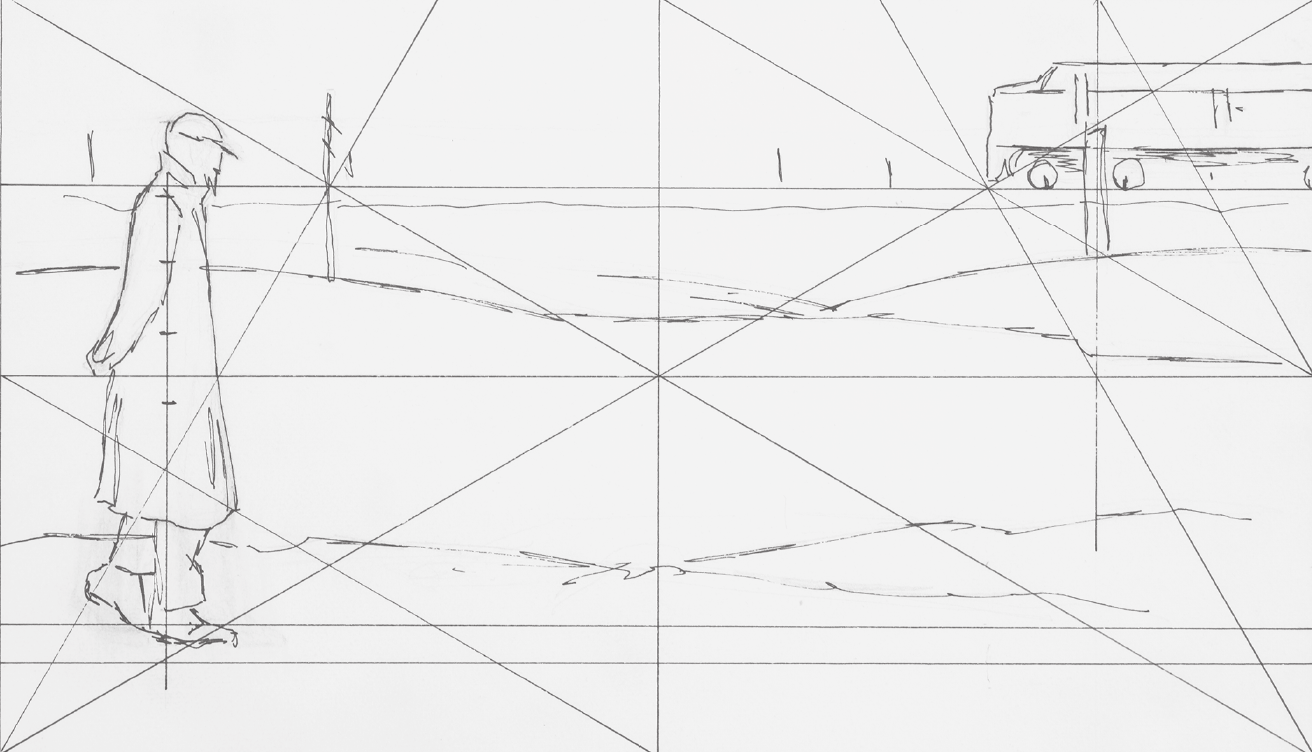
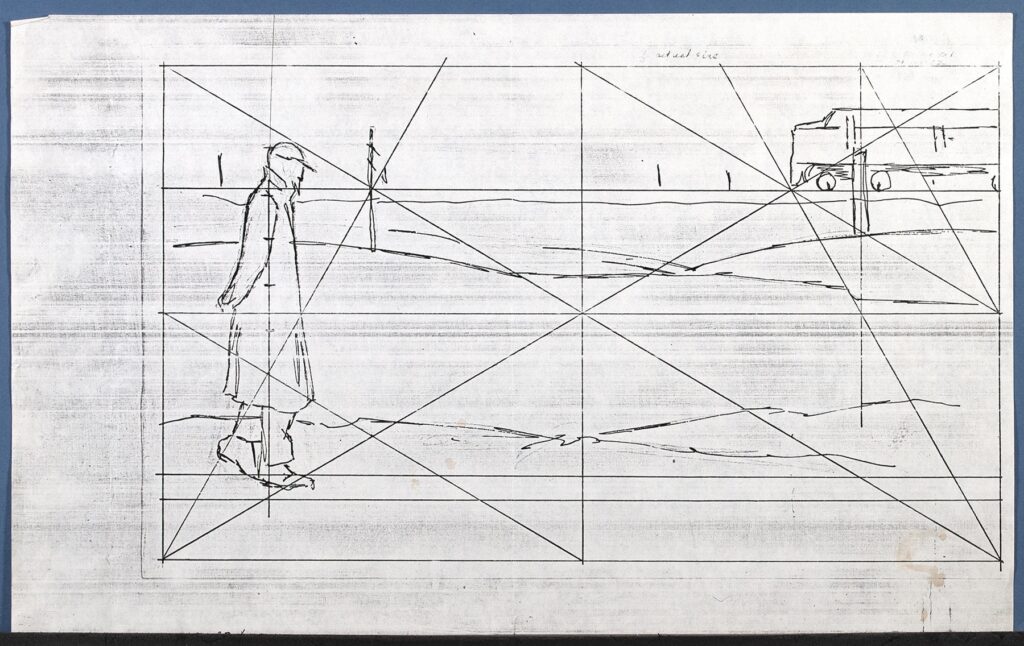
Building on and adapting principles from Italian Renaissance theorist Leon Battista Alberti, Colville used detailed preparatory drawings, geometrical formations, and precise calculations to inform his paintings’ compositions.
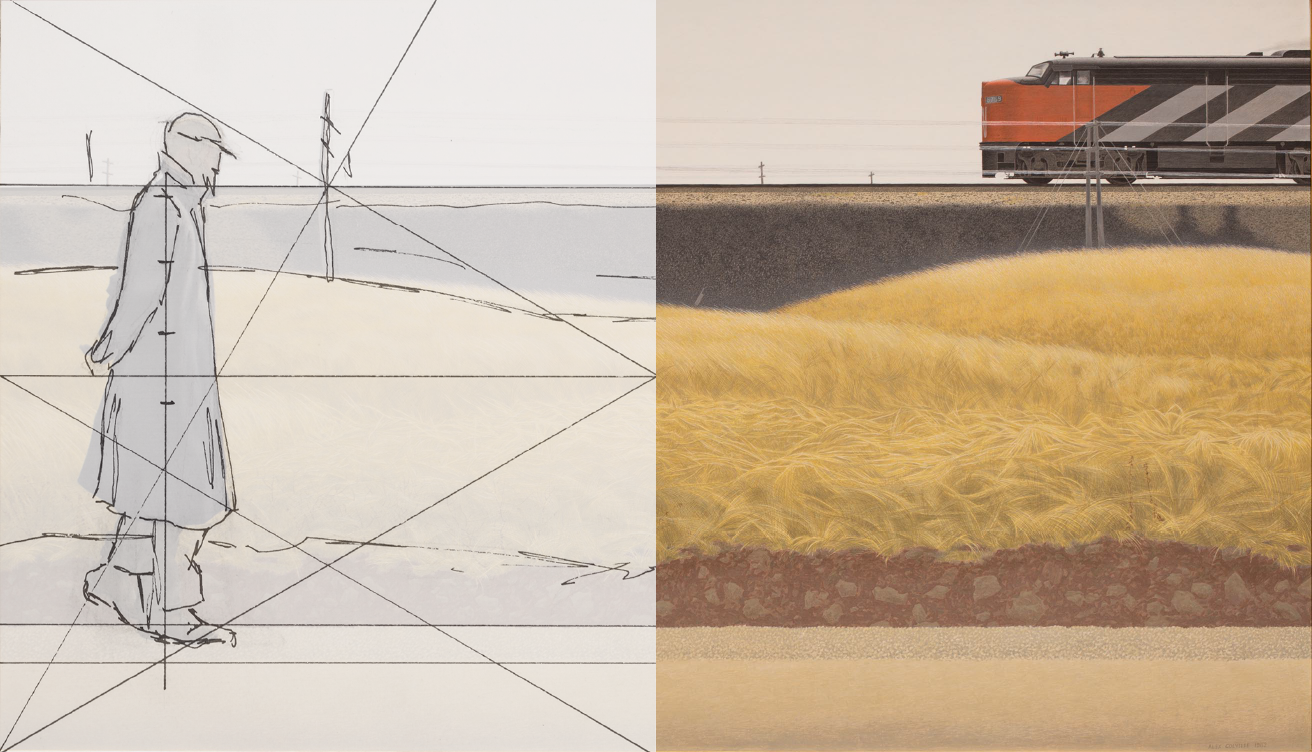
Seen alongside his finished paintings in the exhibition Colville, Forrestall, Pratt & Pratt: The Work Behind the Work, these studies reveal the remarkable degree of planning behind each work, offering a deeper appreciation for the precision and deliberate choices that define Colville’s distinctive realism.
By examining the preparatory drawings, viewers can see how Colville carefully considered the relationships between forms and details, revealing the thought and calculation behind scenes that appear at once natural and precisely composed.
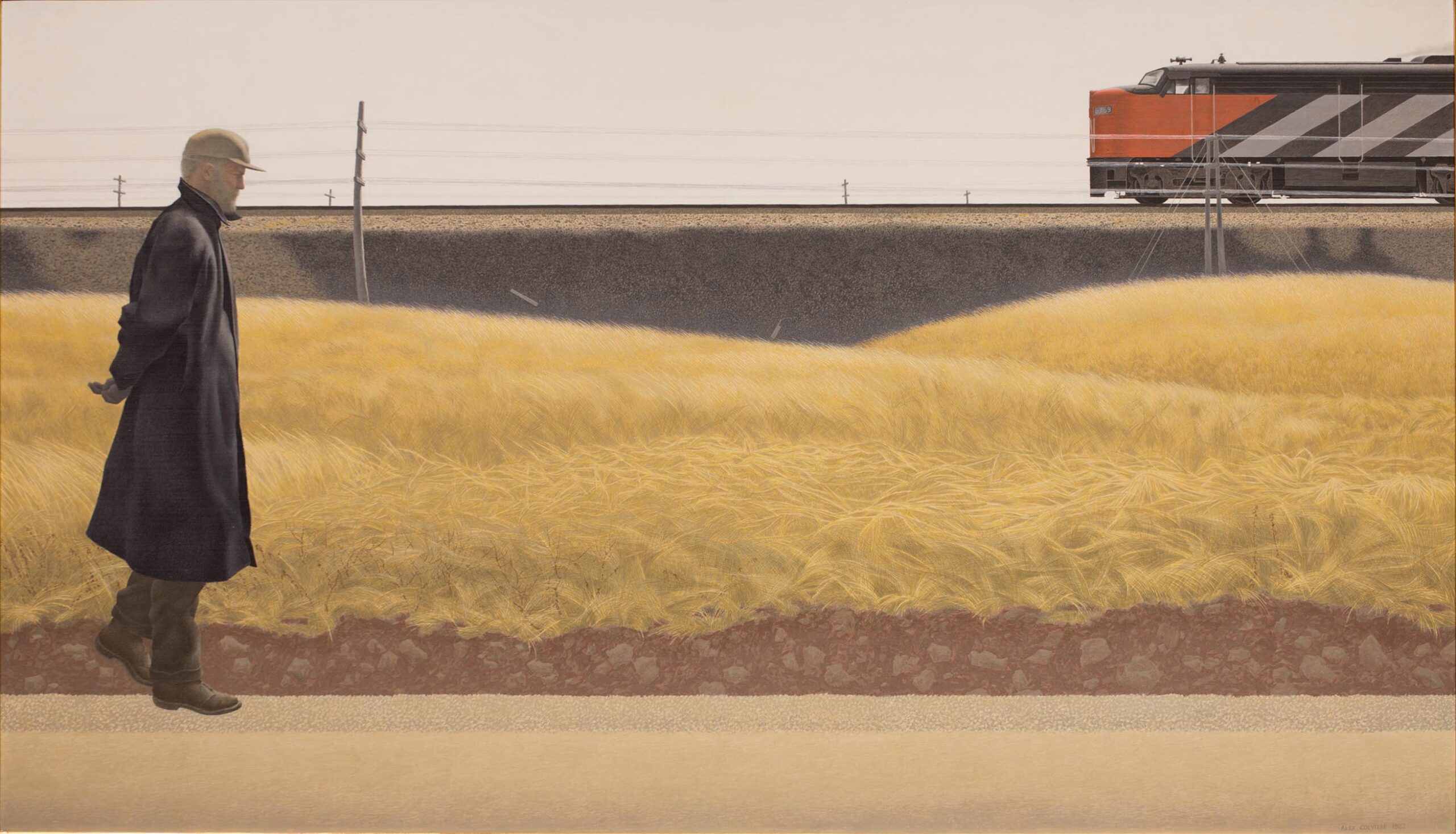
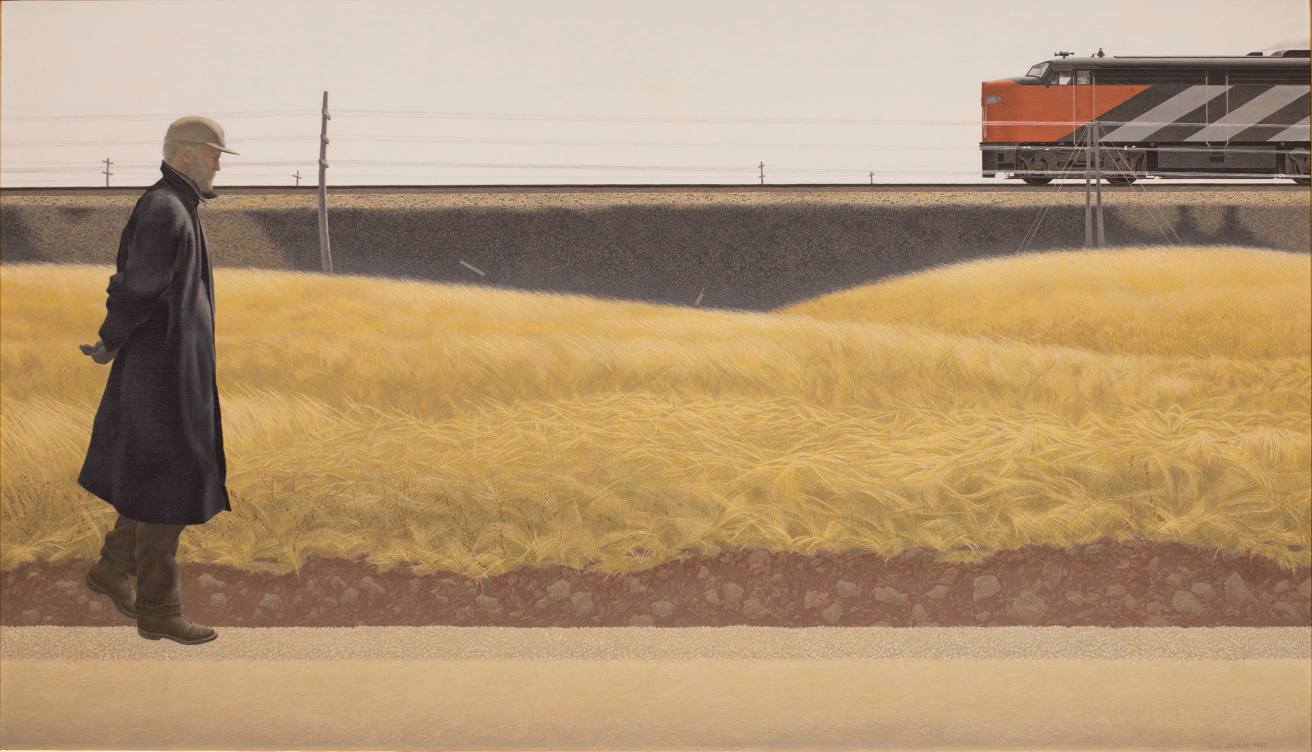
Central to the exhibition is Colville’s painting Ocean Limited (1962). While many metaphorical references have been drawn out of the subjects within the painting, such as intelligence versus brute force, or the impact of technology on humanity, his motive for creating the work stems from personal experience and observation of his everyday surroundings while living in Sackville, New Brunswick.
Image: Alex Colville, Ocean Limited, 1962. Oil and synthetic resin on Masonite. 68.5 x 119.3 cm. Purchased with funds provided by Christopher Ondaatje, Toronto, Ontario, the Art Sales and Rental Society, Halifax, Nova Scotia and a Private Donor, 1994.
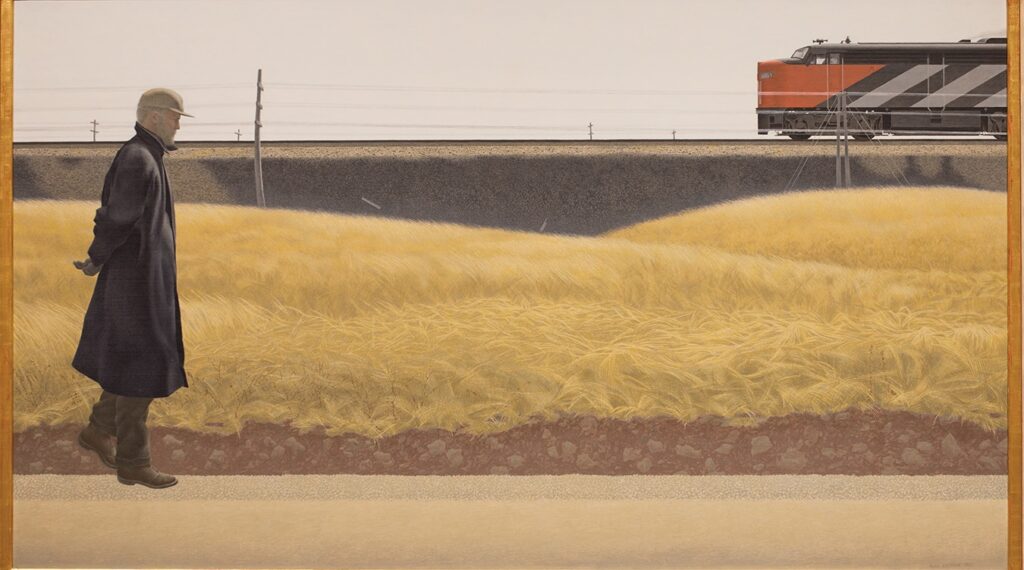
Characteristic of his style, the landscape in the work is layered and rich with texture and detail, yet precise and orderly. The placement of the walking man in the foreground against the approaching train in the background creates a tension that is expressed throughout Colville’s career and can be seen in earlier works such as Horse and Train (1954) and later works like Dog in Car (1999). A great sense of anticipation emerges between opposing forces or intentions of his works’ subjects.
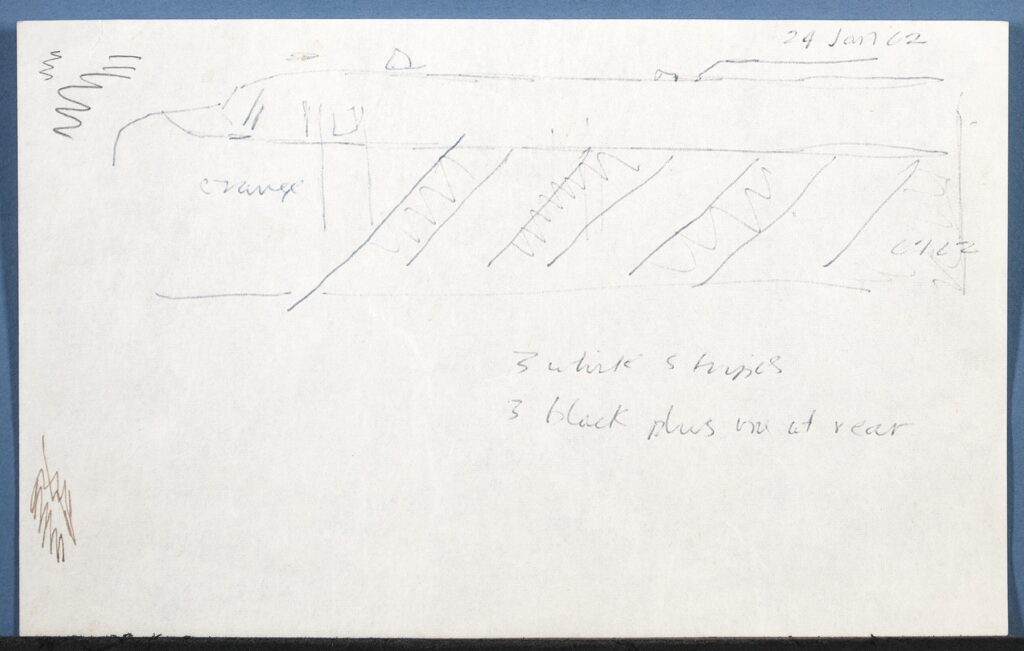
As part of his research for the painting, Colville studied engines in CN Rail shops in Moncton, carefully noting the trains’ visual features such as the diagonal black-and-white stripes on the side.
Image: Alex Colville, Study for Ocean Limited, 1961-1962, graphite and ink on paper, 12.5×20.2cm, gift of the artist, Wolfville, Nova Scotia 1998
Calibrated lines, triangles, rectangles, and grids establish proportion, balance, and visual harmony, creating sightlines that guide the viewer toward a vanishing point with mathematical precision and a distinct realist sensibility that characterises his practice.
Image: Alex Colville, Study for Ocean Limited, 1961-1962, graphite and ink on paper, 18.4x31cm, gift of the artist, Wolfville, Nova Scotia 1998
This blog post has been adapted from the exhibition catalogue The work behind the work : Colville, Forrestall, Pratt & Pratt, produced by the Art Gallery of Nova Scotia. The original text has been edited and adapted for online publication.