


Kent Monkman: Who Is Miss Chief?
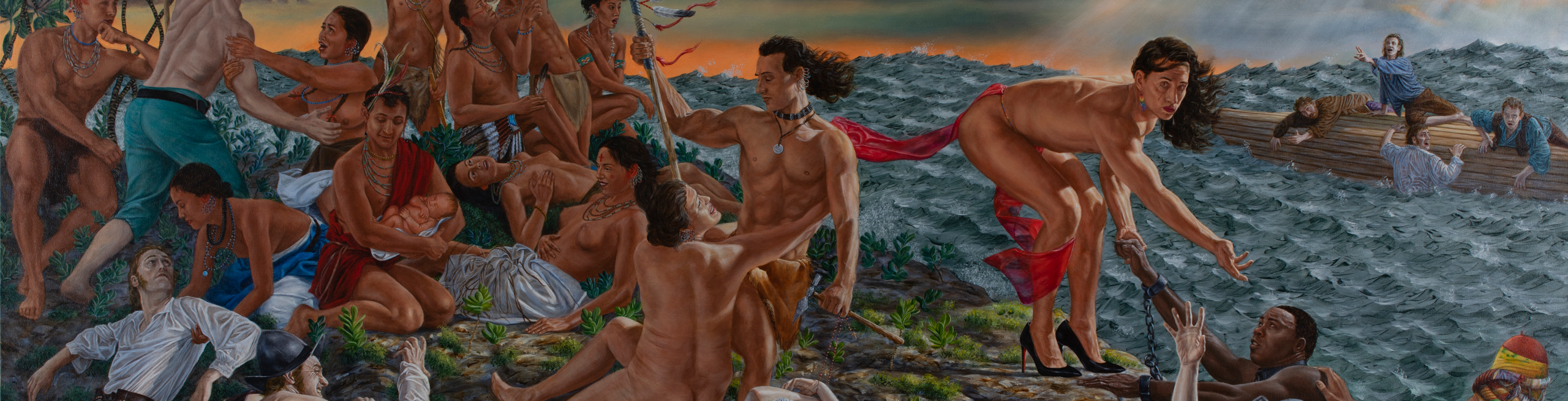
Sweeping across Kent Monkman’s ambitious canvases in the exhibition Kent Monkman: Breaking Waves, one figure continually captures the viewer’s imagination: Miss Chief Eagle Testickle. More than a recurring character, Miss Chief is Monkman’s time-travelling alter ego, a figure through whom the artist explores history, identity, gender, sexuality, and Indigenous representation.
Miss Chief Eagle Testickle first appeared in Monkman’s work in the early 2000s, as the artist was considering the absence of Indigenous—and specifically queer Indigenous—voices within the Western art canon. Drawing on Cree trickster figures such as Wisakedjak, as well as the gender diversity present in many Indigenous societies before colonization, Monkman developed Miss Chief as a figure who moves across time, space, and gender. Her name combines “mischief” and “egotistical,” reflecting the character’s playful and disruptive qualities.
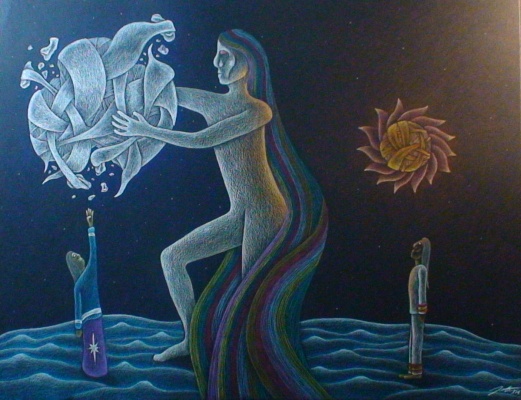
Miss Chief appears throughout Monkman’s practice in scenes that draw on European art history, Indigenous histories and traditions, and contemporary life. She may appear in elaborate regalia or selective luxury-fashion, participate in encounters between Indigenous and European figures, and/or address the viewer directly. Through this persona, Monkman examines questions of representation, visibility, and the ways Indigenous and gender-fluid perspectives have been positioned within dominant histories of art and culture.
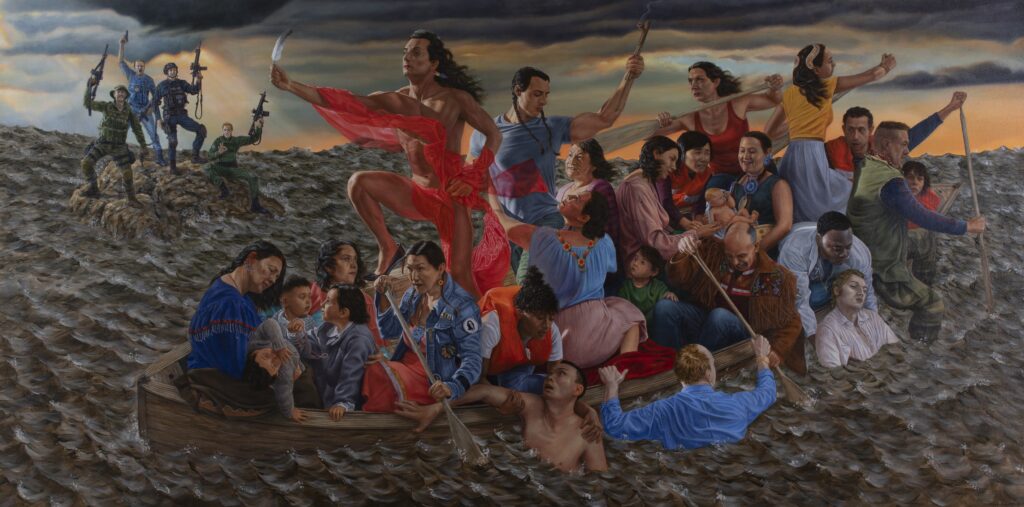
In Miss Chief’s Wet Dream (2018), Miss Chief appears at the centre of a turbulent seascape, asleep between two vessels: a European raft and an Indigenous canoe. The composition draws on several art historical references, including Eugène Delacroix’s Christ on the Sea of Galilee (1854). In Delacroix’s painting, Jesus Christ appears on a boat during a storm, recalling the biblical story in which he awakens to calm the sea, rescuing the sailors from a dire fate. Monkman reworks this imagery by placing Miss Chief at the centre of a different encounter, surrounded by vessels and figures associated with European and Indigenous histories.
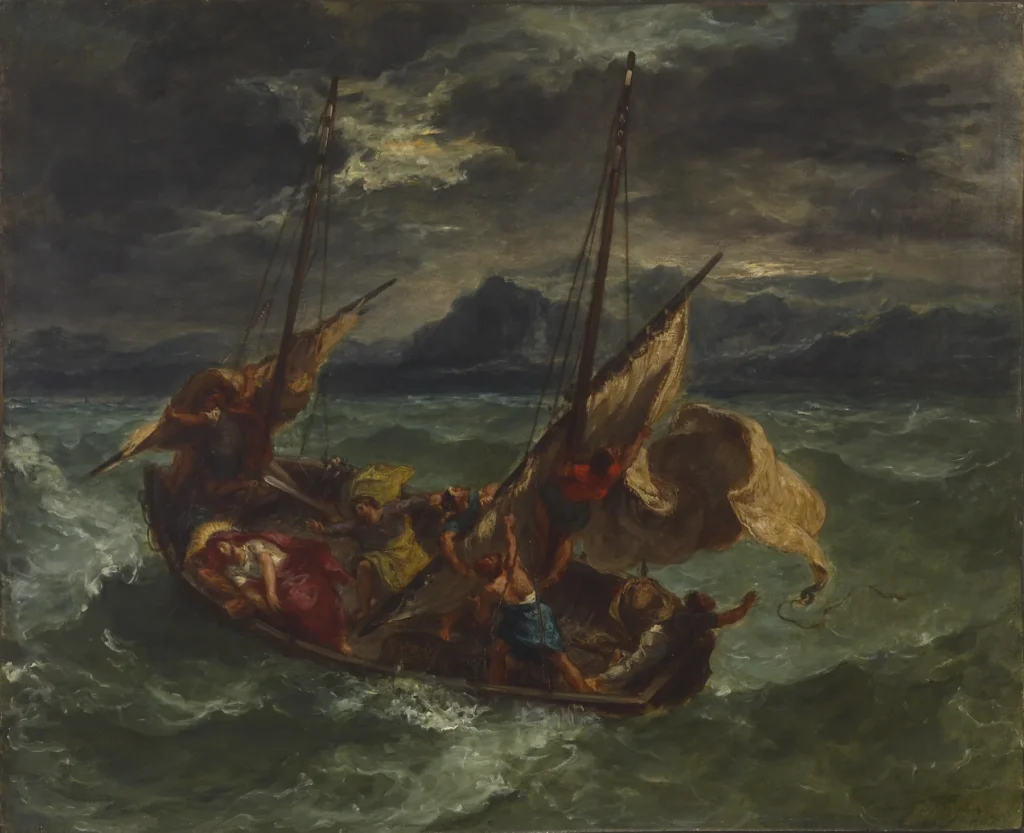
59.8 × 73.3 cm. The Walters Art Museum, Baltimore, USA.
The painting’s references to sleep and dreaming also connect to Anne-Louis Girodet de Roussy-Trioson’s The Sleep of Endymion (1791). Girodet’s painting depicts the mythological figure Endymion in sleep and combines themes of dreaming, beauty, and eroticism. Monkman has identified the work as an important reference for Miss Chief’s Wet Dream (2018), particularly its erotic component and its depiction of sleep.
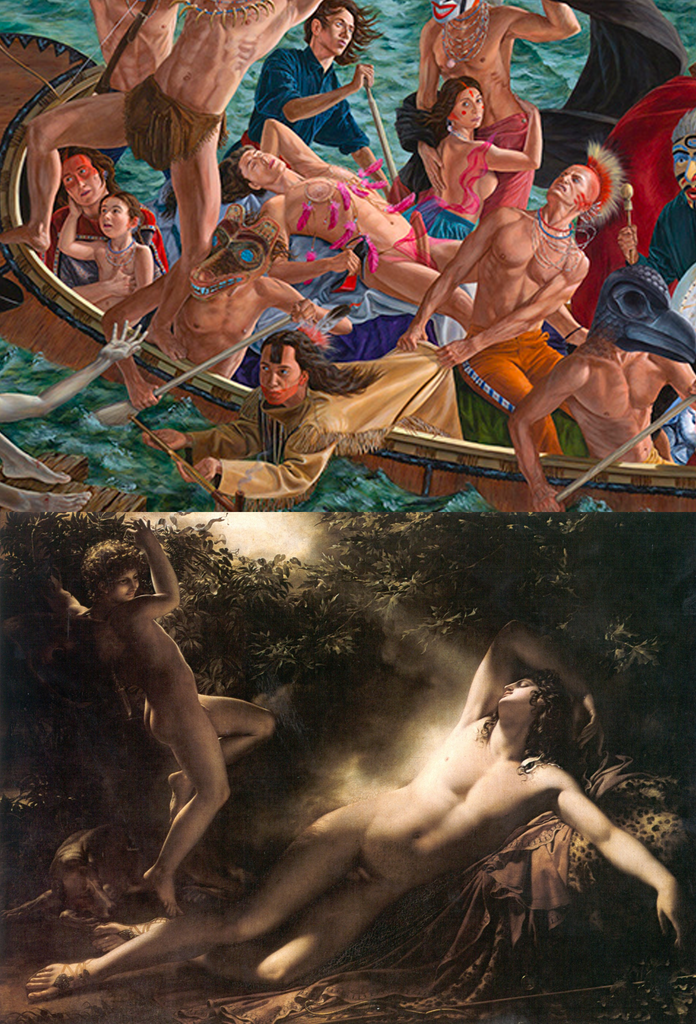
Anne-Louis Girodet de Roussy-Trioson, The Sleep of Endymion, 1791.
Oil on canvas. 198.0 × 261.0 cm. The Louvre Museum, Paris, France.
As Monkman has explained, “I wanted people to think about what treaties were intended to be, how they were interpreted by Indigenous Peoples, and where did they go wrong?” Miss Chief’s position within the painting connects this question to the surrounding imagery of the two vessels and their passengers. Her sleep creates a pause within the turbulent scene, allowing dreaming to function as a way of considering possibilities beyond the conflicts represented in the composition.
Across Monkman’s practice, Miss Chief is both subject and storyteller. She is inside the events and outside of them, breaking the fourth wall, winking at the audience, and subverting expectations. Her gender fluidity, sexuality, and self-assuredness are openly asserted in every scene she enters, confronting colonial binaries and reclaiming the space historically denied to Indigenous and queer identities. Monkman has described her as a legendary being who comes from the stars, hinting at her cosmic origins and her ability to move between the earthly and the spiritual, the masculine and the feminine, the past and the possible future.
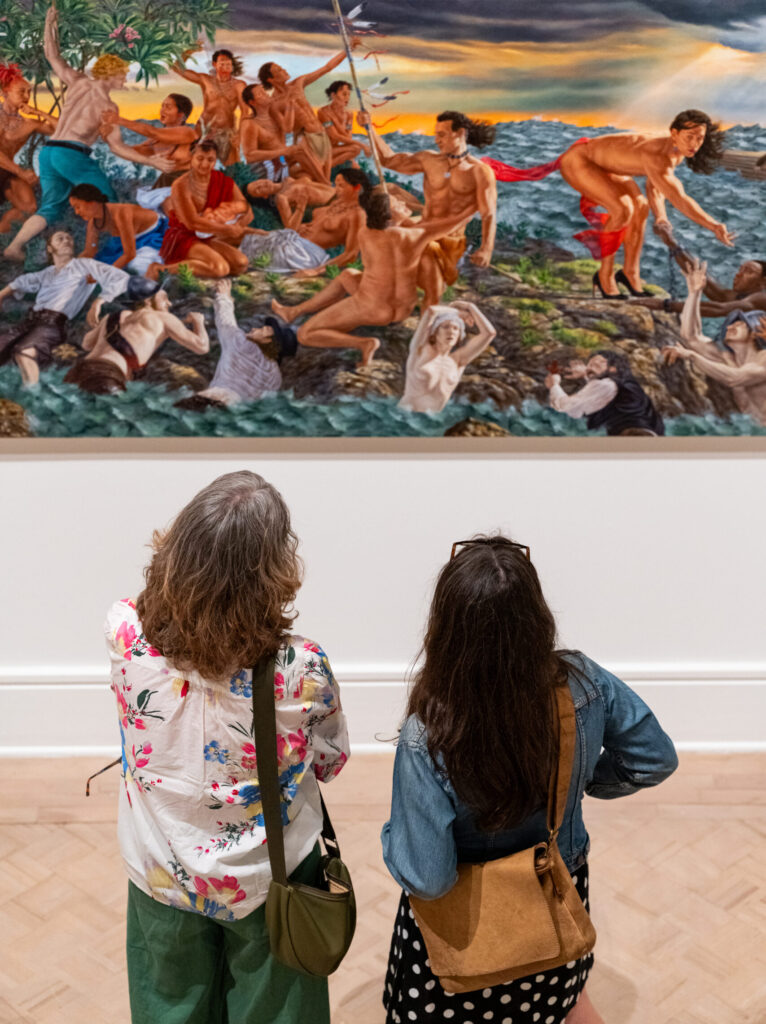
Miss Chief’s role extends beyond individual paintings. Through humour, sensuality, and theatricality, she allows Monkman to revisit historical narratives from an Indigenous perspective while challenging established conventions of art history. In Miss Chief’s Wet Dream (2018), her position at the centre of the composition brings together themes of treaties, cultural encounter, desire, and dreaming, while leaving space to imagine what might emerge from their collision.
As Miss Chief Eagle Testickle, she moves across time, perspectives, and artistic traditions. Her presence gives Monkman a way to disrupt familiar narratives and introduce other possibilities for understanding the past, connecting historical imagery with contemporary Indigenous experience. That journey across time continues beyond the canvas in The Memoirs of Miss Chief Eagle Testickle: Vol 1 and The Memoirs of Miss Chief Eagle Testickle: Vol 2, written by Kent Monkman and Gisèle Gordon.
Across two volumes, the memoir follows Miss Chief from the creation of the universe through to the present day. Along the way, it explores Cree cosmology, colonialism, displacement, and Indigenous resilience, blending historical events with imagined stories to trace the history of Turtle Island through her experiences. Like Monkman’s paintings, the memoir uses Miss Chief’s perspective to revisit familiar histories and imagine other ways of understanding them, offering another way to enter the world of a character who has become central to Monkman’s practice.